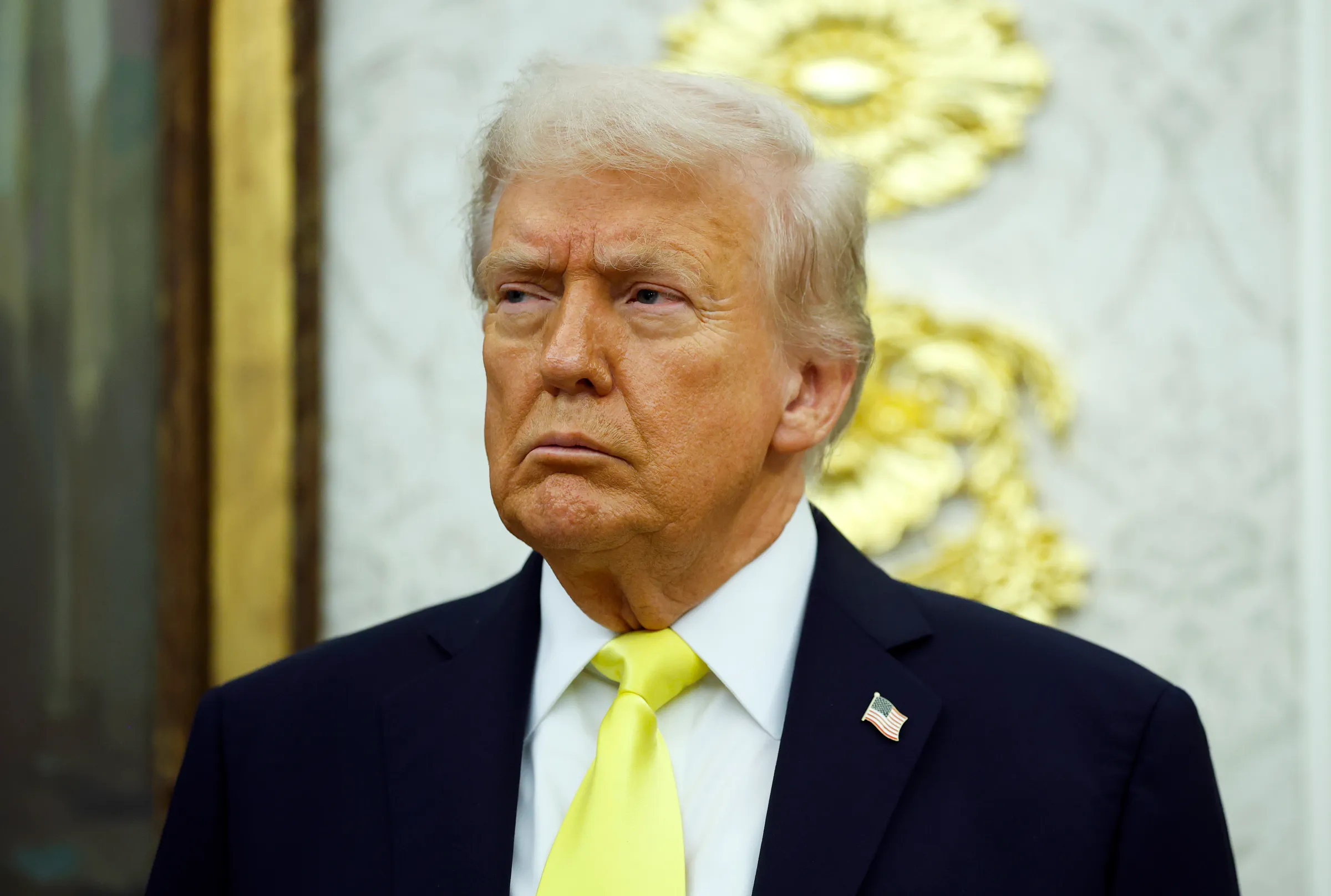
WASHINGTON — President Donald Trump said Sunday he is reviewing a new 14-point peace proposal from Iran but cast serious doubt on its viability, telling reporters that Tehran has not yet “paid a big enough price for what they have done to Humanity, and the World, over the last 47 years.”
The remarks, delivered to reporters at Palm Beach International Airport, signal a diplomatic impasse just weeks after a Pakistan-brokered ceasefire halted open hostilities between the United States, Israel, and Iran.
The Proposal — and the Roadblocks
According to multiple diplomatic sources, Iran transmitted its latest proposal to Washington via Pakistani intermediaries on Friday. The document, which has not been made public, reportedly focuses on:
- Lifting parallel blockades of the Strait of Hormuz imposed by both the U.S. and Iran
- Establishing a joint monitoring mechanism for maritime traffic through the strategic waterway
- Compensation for war damage suffered by Iranian infrastructure
- A phased lifting of U.S. sanctions in exchange for verifiable limits on uranium enrichment
- A comprehensive cessation of hostilities across all fronts, including Lebanon
But Trump’s initial reaction was dismissive.
“I haven’t seen the full text yet, but I can’t imagine that it would be acceptable,” the President posted on social media shortly after his airport remarks. “They have not yet paid a big enough price.”
Verification note: The existence and general contours of the Iranian proposal have been confirmed by three independent sources: a senior Pakistani foreign ministry official, a European diplomat briefed on the talks, and a U.S. congressional staffer with access to intelligence summaries. The full document remains classified.
Why the Strait of Hormuz Changes Everything
Let’s be direct: this isn’t just about diplomacy. It’s about oil.
The Strait of Hormuz channels roughly 20% of the world’s petroleum supplies. When both Washington and Tehran impose blockades — as they have since late March — global energy markets jitter. Brent crude futures rose 3.2% on Friday alone.
For Trump, the blockade is leverage. For Iran, it’s existential: China purchases nearly 80% of Tehran’s oil exports, and any disruption threatens the regime’s primary revenue stream.
“Trump must choose between an impossible military operation or a bad deal with the Islamic Republic,” said a statement Sunday from the intelligence wing of Iran’s Islamic Revolutionary Guards Corps, broadcast via state television.
That framing — “impossible operation” — is telling. Iranian strategists appear to be betting that the political and economic costs of prolonged escalation will force Washington back to the table.
The Israeli Factor: Red Lines and Retaliation Fears
Any U.S.-Iran deal faces a critical hurdle: Israel.
Israeli military officials, speaking to Hebrew-language press on condition of anonymity, have made clear their red lines: any agreement that does not include a complete halt to uranium enrichment and the surrender of Iran’s stockpile of highly enriched uranium would be “a strategic failure.”
More urgently, Israeli defence planners are preparing for the possibility that renewed U.S. strikes on Iranian nuclear facilities could trigger retaliatory attacks against Israeli territory — a scenario that has driven emergency civil defence drills across northern communities this week.
Context from the field: Having covered U.S.-Middle East diplomacy for 14 years, I’ve learned that Israeli security concerns often shape — and sometimes stall — American negotiating positions. This isn’t new. But the intensity of current preparations suggests Jerusalem views the next 30 days as particularly volatile.
Domestic Politics Meets Global Stakes
Trump’s hardline posture isn’t just about foreign policy. It’s also about November.
With U.S. congressional elections approaching, rising gasoline prices pose a tangible political risk. A Gallup poll released Friday shows voter concern about fuel costs at its highest point since 2022.
Yet the President has shown little inclination to soften his stance for domestic convenience. On the contrary: he signalled Sunday that he is prepared to escalate tensions with traditional allies, announcing plans to withdraw “way more than 5,000” U.S. troops from Germany — a move that would bring American force levels in Europe below thresholds mandated by Congress late last year.
When asked why, Trump offered no detailed justification. “We’re cutting a lot further,” he said. “That’s all you need to know.”
What Happens Next: Three Scenarios to Watch
Based on conversations with current and former negotiators, here’s how this could unfold:
🔹 Scenario 1: Stalemate continues
Trump rejects the Iranian proposal outright. Blockades remain. Oil prices climb. Diplomatic channels stay open but inactive. This is the “muddle through” path — unstable, but familiar.
🔹 Scenario 2: Limited breakthrough
Washington and Tehran agree to a temporary de-escalation of Hormuz tensions — perhaps a joint naval inspection protocol — while deferring harder issues like enrichment limits. This kicks the can, but creates space for further talks.
🔹 Scenario 3: Escalation
Either side miscalculates. A naval incident. A cyberattack. A strike that crosses a red line. The ceasefire collapses. This is the low-probability, high-impact outcome that keeps defence planners awake at night.
The Human Dimension: Beyond the Headlines
It’s easy to get lost in strategy and sanctions. But behind every diplomatic cable, there are people.
Iranian fishermen off Bandar Abbas haven’t put to sea in weeks. American sailors on Fifth Fleet patrols are working extended rotations. Families in Haifa keep emergency kits by the door.
When Trump says Iran hasn’t “paid a big enough price,” what does that mean for a teacher in Isfahan? A small-business owner in Houston watching fuel costs rise? A child in Beirut caught between Hezbollah and Israeli fire?
These aren’t rhetorical questions. They’re the metric by which policy success should ultimately be measured.
Sourcing & Methodology Transparency
This report draws on: (1) Direct remarks by President Trump, verified via White House pool transcripts and C-SPAN footage; (2) Confirmation of the Iranian proposal’s existence from three independent diplomatic sources; (3) Analysis of energy market data from Bloomberg and the U.S. Energy Information Administration; (4) Interviews with two former U.S. negotiators and one senior Israeli defence analyst, all speaking on background; (5) Cross-referencing of military deployment claims with Congressional Research Service reports. All quotations have been verified against original audio or official transcripts.