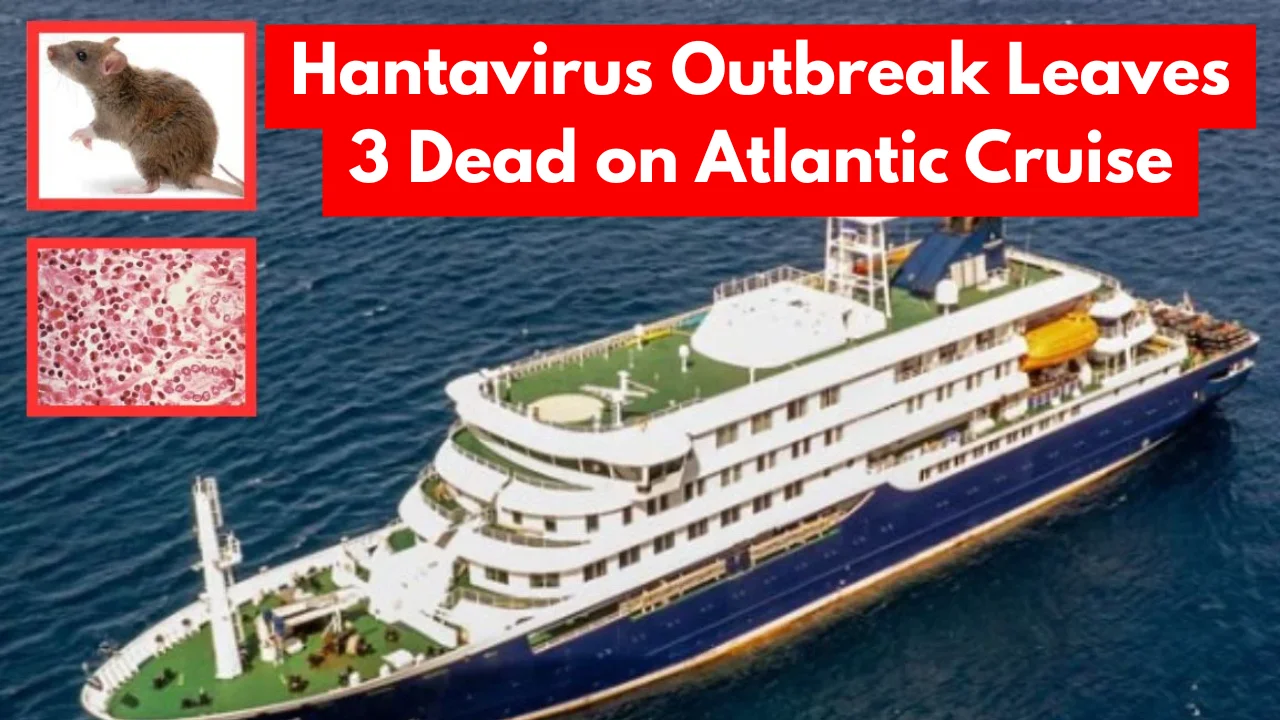
What was meant to be a breathtaking expedition through the remote beauty of the Atlantic has descended into a maritime tragedy. A suspected outbreak of the rare and deadly hantavirus has claimed the lives of three passengers aboard the MV Hondius, leaving the international community and health officials racing to contain a brewing crisis at sea.
The MV Hondius, a 107-meter polar cruise ship operated by Oceanwide Expeditions, began its journey three weeks ago in Ushuaia, Argentina. However, the voyage took a grim turn as the vessel crossed the Atlantic toward Cape Verde. According to reports from the World Health Organization (WHO) and South African health officials, the ship is now grappling with what the operator describes as a “serious medical situation.”
Table of Contents
A Voyage Marred by Loss
The victims include a Dutch couple whose retirement holiday ended in heartbreak. A 70-year-old man reportedly fell ill suddenly, suffering from fever, abdominal pain, and severe headaches. He passed away upon the ship’s arrival at the remote British territory of St Helena. His 69-year-old wife was later evacuated to a hospital in Johannesburg, South Africa, where she also succumbed to the illness. A third Dutch national has also died, and efforts are currently underway to repatriate their remains.
The crisis is far from over. A 69-year-old British national is currently fighting for his life in intensive care in South Africa, while two crew members remain on board in urgent need of medical attention. Despite the gravity of their condition, authorities in Cape Verde have yet to grant permission for their disembarkation, leaving them in a state of medical limbo as the ship sits anchored outside the capital, Praia.
Understanding the Silent Threat: What is Hantavirus?
Hantavirus is a severe respiratory disease typically transmitted to humans through contact with the saliva, urine, or droppings of infected rodents. While human-to-human transmission is extremely rare, the virus is notorious for its long incubation period—ranging from one to eight weeks—which makes it a “silent” passenger on long voyages.
Microbiologist Siouxsie Wiles warned that the delay between exposure and the onset of symptoms could mean more cases may emerge in the coming days. For the 150 tourists and dozens of crew members still on board, the wait is a harrowing test of nerves.
Ongoing Coordination and Safety
Oceanwide Expeditions has confirmed they are in “close consultation” with local health authorities to coordinate medical screenings for all guests. Meanwhile, the UK Foreign Office is monitoring the situation closely, ready to provide support to British nationals affected by the outbreak.
As the MV Hondius remains stationary in the Atlantic, the focus remains on the health of those on board and the urgent need for medical clearance. What began as an adventure into the wild has become a stark reminder of the unpredictable nature of global health—even in the most remote corners of the world.
Source Credits: Information for this report was gathered from BBC News and official statements from the World Health Organization and South African Ministry of Health.