

WASHINGTON — An audacious operation Saturday night deep inside Iran rescued an American officer whose fighter jet had gone down behind enemy lines, a dramatic mission involving hundreds of U.S. soldiers that underscored the ongoing dangers of President Trump’s war.
Early on Easter Sunday morning, the president celebrated the mission as one of the most daring of its kind in U.S. history. But he was angrily threatening to escalate the conflict only hours later, warning Iran with an expletive that he would order strikes against its vital infrastructure unless it agreed by Tuesday to allow maritime traffic through the Strait of Hormuz.
“Tuesday will be Power Plant Day, and Bridge Day, all wrapped up in one, in Iran,” Trump wrote on his social media website. “There will be nothing like it!!! Open the Fuckin’ Strait, you crazy bastards, or you’ll be living in Hell – JUST WATCH! Praise be to Allah.”
It was a precarious moment in a war the Trump administration repeatedly vowed would be over by now. Yet, more than five weeks after joint U.S. and Israeli strikes began, the president has struggled to identify a clear endgame to the conflict.
New dangers have emerged on the battlefield, demonstrated by the downing of two U.S. aircraft Friday, prompting a series of risky rescue missions, including the expansive operation Saturday that retrieved a missing weapons systems officer.
The Islamic Republic’s stockpile of fissile material, capable of producing nuclear warheads, remains buried underground in Iranian custody. And Tehran’s stranglehold on the strait — through which a fifth of the world’s oil typically passes each day — has already driven up energy prices worldwide, raising fears of an impending oil shock.
In a series of phone interviews Sunday with reporters, Trump said he still wanted the war to end in a matter of days, not weeks. But he doubled down on his deadline — following up with a post warning Iran that attacks would escalate at 8 p.m. Eastern Time on Tuesday — telling one reporter that “very little” would be off the table if Tehran doesn’t capitulate.
“If it happens, it happens,” he told ABC News. “And if it doesn’t, we’re blowing up the whole country.”
A mountain rescue
A senior administration official told The Times that Saturday’s mission began with a deception campaign launched by the CIA to throw off Iran’s military.
The intelligence agency intentionally leaked plans to transport a valuable package out of the country — first by ground convoy to Iran’s southern coast, then by sea into international waters — in order to draw Iranian forces away from the officer’s true location in the crevice of a mountain, the official said.
The CIA shared details of the officer’s locator beacon with the White House and the Defense Department, and monitored his movements in real time as he navigated a ridge at an altitude of nearly 7,000 feet above sea level, awaiting rescue. U.S. forces struck targets in the area to keep Iranian forces at bay before deploying assets for the extraction.
“The Iranians were confused and uncertain of what was happening,” the official said.
The officer sustained injuries while evading Iranian forces, Trump acknowledged on social media, adding that “he will be just fine.”
It was not immediately clear whether other service members involved in the rescue mission sustained injuries, or whether the U.S. military suffered any other potential setbacks.
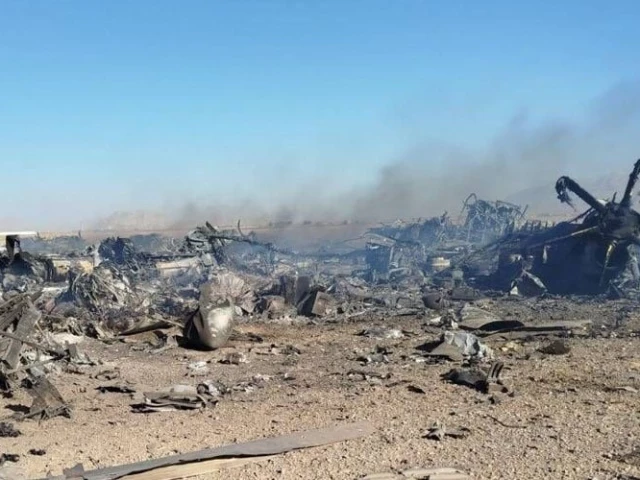
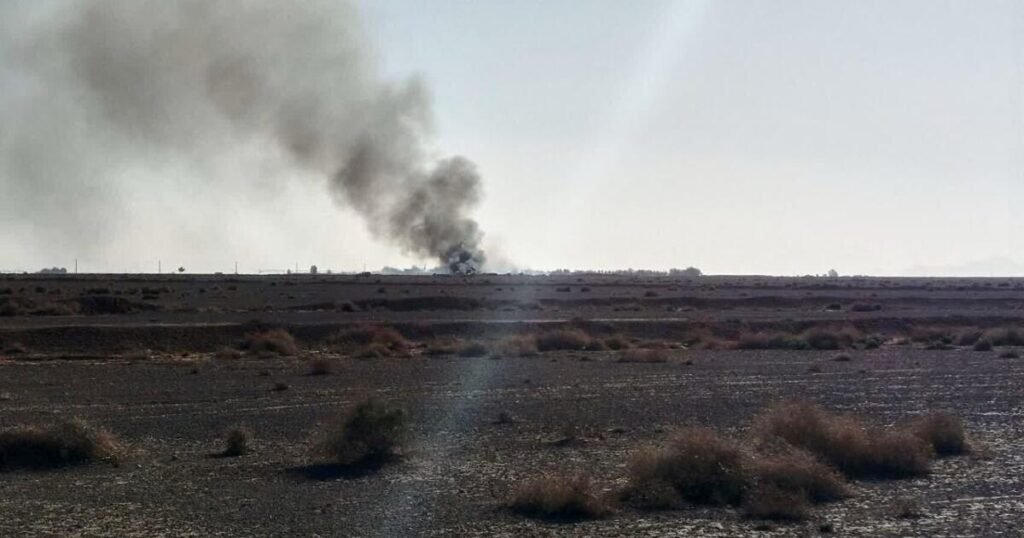
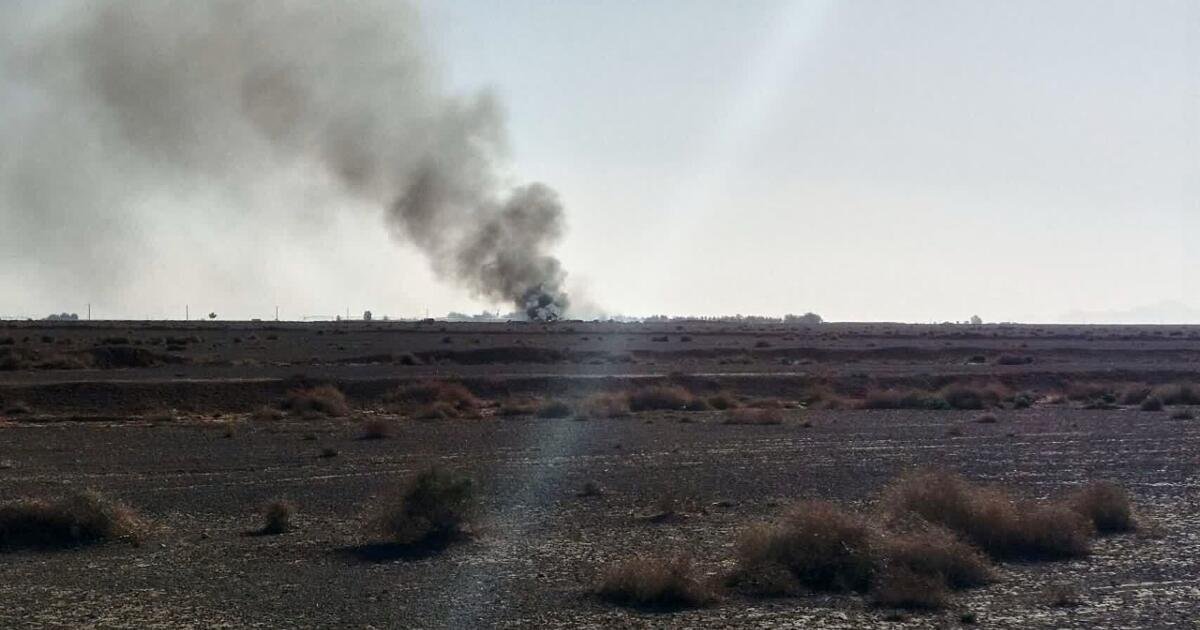
Iran’s military claimed credit for downing additional U.S. aircraft as the operation unfolded, including two Black Hawk helicopters and two C-130 military transport planes. “The U.S. Army’s so-called rescue operation,” said Iranian military command spokesman Lt. Col. Ebrahim Zolfaqari, “was brought to a complete failure by the [timely] presence of the Iranian armed forces.”
U.S. officials said they blew up the aircraft themselves after landing in Iran to offload equipment and personnel for the mission.
The loss of additional American aircraft was seen by some in Iran as evidence that the U.S. mission was not a complete success.
But the ability of the U.S. military to land and operate so deeply inside the country — just south of Isfahan, a major city and home to Iran’s largest atomic science facility — raised concerns among others that U.S. forces could begin conducting additional ground operations anywhere in the country and at any time of their choosing.
The weapons systems officer ejected from an F-15 fighter jet downed by enemy fire Friday alongside the pilot, who landed at a separate location and was rescued within hours of the attack, U.S. officials said.
An A-10 Thunderbolt II also fell that day, under conditions disputed by the two sides. The U.S. military has not commented on the status of that aircraft or its crew, but a U.S. official told The Times that its lone crew member had been successfully rescued, and that all aviators involved in Friday’s events are now “safe and accounted for.”
Iran responds
Mohammad Bagher Qalibaf, Iran’s pugnacious parliament speaker, continued his now-daily trolling of the Trump administration, posting a picture depicting the smoking wreckage of what appeared to be two planes and two helicopters.
“If the United States gets three more victories like this, it will be utterly ruined,” Qalibaf wrote. He concluded with a clapping emoji.
He later responded to Trump’s threats to target energy infrastructure with another tweet on X, saying his “reckless moves are dragging the United States into a living HELL for every single family.”
Trump had initially given Tehran a 10-day deadline to negotiate a ceasefire, demanding an end to Iranian attacks in the strait and a complete end to its nuclear program.
“Our whole region is going to burn because you insist on following [Benjamin] Netanyahu’s commands,” Ghalibaf said, referring to Israel’s prime minister. “Make no mistake,” he added, “you won’t gain anything through war crimes.”
Wilner reported from Washington and Bulos from Beirut.